

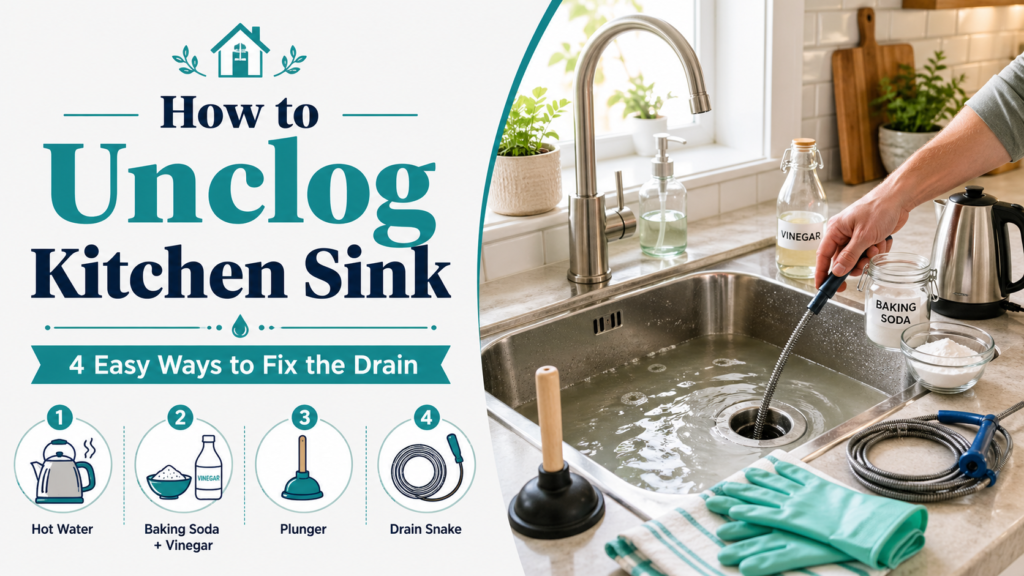
How to Unclog Kitchen Sink: Simple and Effective Solutions
How to unclog kitchen sink can be a common and frustrating household issue. It disrupts your daily routine, whether you’re washing dishes, rinsing fruits, or disposing of food waste. But don’t worry! Many clogged sinks can be fixed without the need for a plumber. This guide will show you how to unclog your kitchen sink using easy, cost-effective methods. Whether you prefer a natural remedy or a DIY solution, there are several ways to restore your sink’s functionality.
Common Causes of Kitchen Sink Clogs
Prior to going into the procedures, it is important to learn about the potential causes of your kitchen sink clog. Food scraps, grease, and soap scums among others, are likely to block kitchen sinks due to their tendency to build up in the drain. The washing of dishes, oils, fats, and food particles tends to move down the drain and accumulate, creating blockages.
The kitchen sink is also prone to clogs caused by some of the following culprits:
Grease and Oil: Grease and oil solidify and stick to the sides of the pipes when draining down the drain, creating an obstinate clog.
Food Scraps: A large accumulation can be formed even by tiny food particles, though fibrous or sticky particles can do so.
Soap Scum: The soap scum may build up in the pipes over time, retarding the drainage or provoking its complete blockage.
Mineral Buildup: Hard water may result in mineral deposits in the pipes, which can gradually result in clogs.
We are now aware of what may be causing the blockage, so now that we are aware, we shall dive into the solutions to the problem.
1. Boiling Water to Unclog the Drain
The simplest and yet efficient way of clearing your sink in the kitchen is to use boiling water. This is an effective way of getting rid of light clogs, which may be due to grease, soap scum or other soft materials that may be obstructing your sink.
How to Do It:
Begin by boiling a pot of water or a kettle. After the water has boiled, pour it down the drain in bits. It is best poured gradually, with the hot water helping to loosen the clog before pouring even more. The boiling water heats up and breaks down grease and soap scum, which is more easily flushed out of the pipes.
To achieve optimum results, repeat the procedure two or three times with a couple of seconds between pours to allow the water time to act. This technique is very simple to perform and does not need any special equipment or reagents.
Why It Works:
Boiling water serves as a heat application to open up the drain, and it softens the hardened fat and grease, enabling them to break apart and run through the pipes. It is a perfect initial measure to use in case of smaller blockages in your kitchen sink. Note, however, that boiling water may not be of help in situations where the clog is deep in the pipes.
2. Clean Drain Sink with Baking Soda and Vinegar
In case the boiling water was not able to help, the second technique is a time-tested DIY fix: vinegar and baking soda. This effective mixture can be used to clean drain sinks effectively without involving the use of harmful chemicals. The chemical reaction of the two ingredients produces the fizzing effect that may be used to loosen and remove the clogs formed through the organic deposition.
How to Do It:
The first step is to pour 1/2 cup of baking soda into the drain. Do not forget to take it to the bottom of the pipes. Then, pour in 1/2 cup of white vinegar. You will hear a fizzy noise when the ingredients combine–this is an indication that the solution is in effect breaking up debris within the pipes. Let the mixture rest between 10 and 15 minutes to give the mixture time to loosen the clog.
Wait and then run hot water through the drain to clean up the loosened debris. The baking soda and vinegar together not only clear blockages, but also aid in cleaning the drain sink by neutralizing odor and keeping the pipes fresh.
Why It Works:
The mild reaction that is formed by baking soda and vinegar will help to dissolve tough clogs without damaging your plumbing. Baking soda is a natural abrasive and therefore assists in cleaning away debris, whereas vinegar is an acid and assists in dissolving oils and scum.
This is a safe, effective and environment-friendly method that is a respite to mild to moderate clogging. It also eliminates the accumulation of dirt and smell in your pipes.
3. Use a Plunger for Stubborn Clogs
When the boiling water and baking soda-vinegar solution has not helped, it is time to resort to the old, reliable plunger. One of the most effective tools that can be used to loosen the hard-to-reach clogs that are found close to the drain is the plunger.
How to Do It:
Start by filling your sink with just enough water to cover the cup of the plunger. When the water level is correctly positioned, put the plunger on the drain and press it down to form a good seal. Now start plunging vigorously. You are to push and pull swiftly to form a vacuum-like suction that will remove the clog. Perform the plunging movement a few times.
In case your kitchen sink has a second drain, then remember to cover it with a wet cloth so that it can be maximally suctioned and effective. Once the plunging has been done a couple of times, run water through the sink to see whether the clog has been removed.
Why It Works:
The suction and pressure applied by the plunger loosen up debris that is trapped inside the pipes. When applied properly, it will be able to dissolve the clogs and dislodge them through the drain. It is particularly useful in clogs close to the surface and can be used to good effect whenever you have soft clogs, such as food scraps.
4. Snake the Drain for Deep Clogs
At times, a clog may be deep in the pipes, and the above methods will not reach it. A plumber’s snake (also referred to as a drain snake) is your best bet in this case. This is a device meant to go deep inside your pipes and loosen up any blockages that are too difficult to loosen with the plunger or boiling water.
How to Do It:
Drain snake: This is a drain cleaning tool to insert into the drain and rotate slowly as it is pushed deeper into the pipes. When you feel resistance, then you must have hit the clog. Continue turning the snake, letting it dislodge the blockage. After you have cleared the resistance, gradually draw the snake out of the drain and rinse the drain with hot water to get out any debris.
Most hardware stores have a drain snake that is simple to use for the majority of people. A homemade snake can be a metal coat hanger, in place of a real snake.
Why It Works:
Its lengthy and flexible cable enables the drain snake to pry into the pipes and loosen up the stubborn clogs unreachable by other means. The rotary motion assists the snake in scraping off its accumulation and debris in order to clean the most stubborn of blockages.
When to Call a Professional Plumber
Though the clogging of the kitchen sink can be cleared through DIY techniques, sometimes a plumber might be needed. When you still cannot get your sink to drain after following the above methods, or to the extent that you may be experiencing some recurrent problems such as gurgling noise or a putrid smell, then you should call a professional.
There are several scenarios that might need a plumber:
Drain clogged deep into pipe: When the clog is too deep into the plumbing system and cannot be removed using a snake or plunger, a plumber will have the necessary equipment to work on it.
Several drains are clogged: When the sink is not the only drain in your house experiencing problems, it is possible that you have a larger plumbing problem.
Corroded or damaged pipes: Over time, pipes may become corroded or damaged, and this may cause blockages. Damaged pipes can be repaired or replaced by a professional plumber.
Preventing Future Clogs
Once you’ve successfully unclogged your kitchen sink, it’s important to take steps to prevent future clogs from forming. The following are some useful tips:
- Grease or oil should not be poured down the drain because it will solidify and create blockages.
- Install a sink strainer to trap food scraps and other debris.
- Flush hot water down the drain often to remove any accumulation of grease or soap scum.
- Clean your drain after every few months using baking soda and vinegar to ensure a smooth flow and minimize the possibility of clogs.
Conclusion
Unclogging a kitchen sink doesn’t have to be a stressful task. These 4 simple techniques, boiling water, baking soda and vinegar, a plunger, and a drain snake will help you attack just about any clog that you come across. These home remedies are efficient, cheap and in most cases, they are equal to calling in a plumber to fix minor to moderate clogs.
You will lower the chances of a future clog by keeping your kitchen sink clean, and with regular maintenance of the drains, you will keep the drains running easily in the years to come. If all else fails, don’t hesitate to call in a professional to handle more complex issues.